
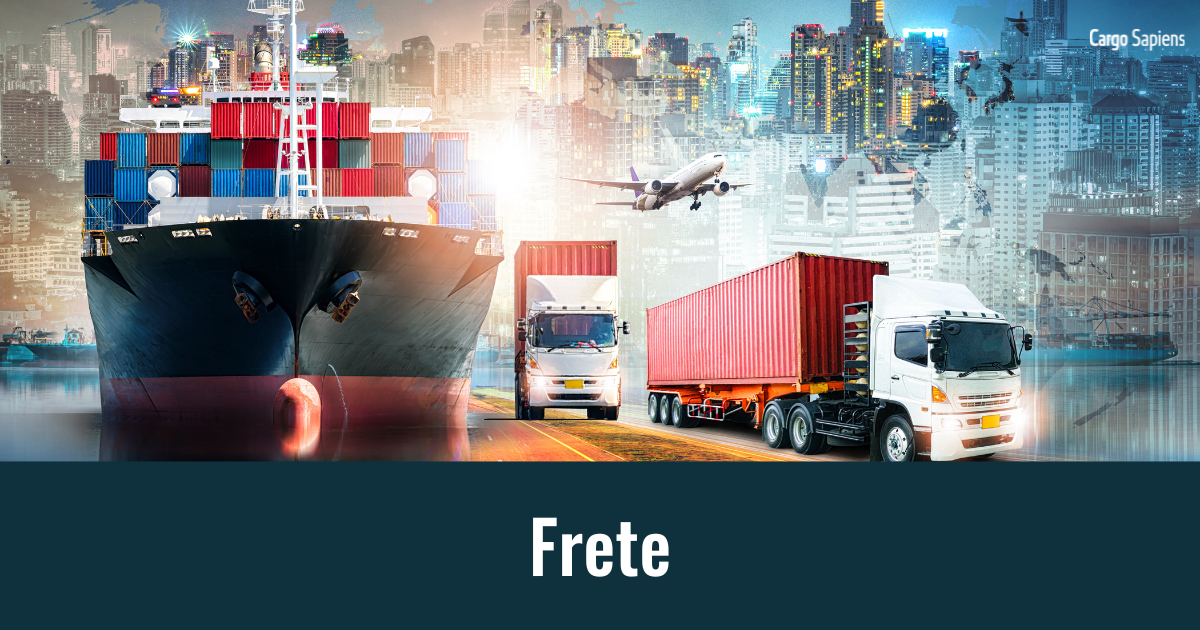
When we talk about freight, many people think only of the cost of transporting a load. But in reality, this concept goes far beyond price. Freight is an essential cog in logistics and the supply chain—it enables the movement of products, connects companies to markets, and ensures that the customer experience doesn't get lost along the way.
The term comes from the French "fret" and can represent both the cost of the service and the transportation operation itself. Whether by road, rail, port, or airport, freight involves strategic decisions: which mode to use, how to optimize routes, what type of insurance to purchase, and how to reduce delivery times without losing efficiency.
In an increasingly dynamic and digital business landscape, understanding what is freight —and how to manage it intelligently—is the first step in transforming logistics costs into competitive opportunities. And the truth is that companies that master this step have a much better chance of scaling safely and predictably.
Want to understand how freight can stop being just another expense and become a logistical differentiator for your business? Then read on: we'll simplify freight and show you how to make more strategic decisions when transporting goods.
What is freight?
Shipping is the amount paid for the transportation of goods between two points. More than a simple tariff, it reflects the entire complexity involved in moving products safely, efficiently, and punctually—whether domestically or internationally.
This logistics cost is determined by a combination of factors: the mode used (road, air, sea or rail), the distance traveled, the weight and volume of the cargo, as well as variables such as the type of merchandise, special requirements, tolls, insurance and taxes.
In practice, freight represents a significant portion of the logistics operation. In so many cases, may correspond to more than 50% of the logistical costs totals of a company, directly impacting the pricing and competitiveness of products.
That's why strategically calculating shipping costs goes far beyond ensuring delivery. It's about optimizing resources, reducing waste, and improving cost predictability. Choosing the ideal shipping method—and knowing when and how to negotiate its terms—is one of the most important decisions for an efficient and scalable operation.
Whether importing, exporting, or distributing domestically, understanding how freight works is the first step toward building a smarter, more connected, and profitable logistics chain.
How does shipping work?
The operation of freight is intrinsically linked to logistical planning. It involves choosing the most appropriate mode of transportation, negotiating rates, and considering all possible additional expenses that may arise. The process begins with defining the type of cargo and ends with delivery to the recipient, always striving for efficiency and cost reduction.
Shipping by weight
Freight by weight is calculated based on the gross weight or cubic weight of the cargo, whichever is greater. This means that if the cargo takes up too much space relative to its actual weight, the volume will be considered in the calculation. This method is fairer for bulky and lightweight items, such as cotton, ensuring that the space occupied is properly charged.
This type of freight also considers small but heavy items, where the actual weight becomes the determining factor in the calculation. This way, carriers can optimize the use of space in their vehicles, charging proportionally to the amount transported.
Shipping by merchandise value
With value-based freight, the cost is calculated based on the value of the merchandise specified on the invoice. This method is primarily used for high-value goods that require special care and may require additional services, such as security escorts. Additional charges, such as GRIS and Ad Valorem, are common and are intended to cover specific risks associated with transportation.
The presence of these fees reflects the need for extra protection against theft or damage, making this type of shipping a common choice for valuable items. Shipping companies often integrate risk management teams to monitor and mitigate potential threats during transit.
A successful delivery is all about well-thought-out logistics planning. It's about choosing the right type of transportation and negotiating good terms with shipping partners. There are several points to consider, such as:
- how quickly delivery needs to be made;
- how the product should be stored;
- the particularities of the route;
- the total cost of the operation.
Shipping isn't just about getting a product from point A to point B. It also includes:
- load monitoring;
- risk management;
- respect for transportation rules.
It all starts with the collection of the goods at the point of origin, where they are carefully prepared. During the journey, the key is to monitor everything closely to resolve any issues that may arise.
And, of course, the final delivery is where the impact is made: it needs to be punctual and meticulous, because this makes all the difference in customer satisfaction. A reliable and efficient freight service goes beyond transport—it reinforces the success of the operation.
What are the types of shipping?
There are different types of freight available on the market, each one serving a specific logistical reality. Choosing the right one directly impacts cost, delivery time, and operational safety. Below, you'll find the most commonly used freight transport models and their main features.
CIF freight
CIF shipping — an acronym for Cost, Insurance, and Freight — involves the seller assuming all costs and risks of delivery to the final destination. In this modality, the cost of shipping and insurance is already included in the product price, simplifying the process for the buyer. It is widely used in B2C transactions and in foreign trade, especially when the end customer is unfamiliar with the logistics management.
FOB freight
With FOB (Free On Board) freight, logistical responsibility changes hands as soon as the cargo is dispatched from the point of origin. From that moment on, the buyer assumes transportation costs, insurance, and operational risks. This type of freight is common in B2B operations and allows the customer greater control over delivery, from contracting the carrier to tracking the cargo.
LTL and FTL freight
These two modalities apply to road transport, depending on the volume of the cargo:
- LTL (Less Than Truckload) freight: recommended for less-than-truckload loads, which occupy only part of the truck. Ideal for companies that don't have large volumes but require agility and reduced costs. The load travels with other loads, optimizing space and sharing costs.
- FTL (Full Truckload) freight: used when the cargo occupies the truck's entire capacity. Recommended for large volumes or goods that require dedicated transportation. Ensures greater safety, agility, and control over the route.
Sea freight
Sea freight is the most popular option in international trade, especially when it comes to large volumes and long distances. Although slower than other modes, it offers excellent value for money for imports and exports. It's the ideal choice when delivery time isn't the most critical factor in the transaction.
road freight
Most common in Brazil, road freight offers flexibility and reach, with door-to-door deliveries over short, medium, and long distances. It is widely used for both domestic transportation and cargo flow to ports and airports. Its main advantage lies in its easy access to different regions and integrated transport modes.
Rail freight
Rail freight is an excellent option for transporting large volumes over long distances, especially on fixed, high-traffic routes. It offers a lower cost per ton transported and a lower environmental impact. However, its application remains limited in Brazil due to limited rail infrastructure.
Air freight
For those who need speed and security, air freight is the best option. It's used for high-value cargo, perishable goods, or urgent deliveries. Although it's more expensive, it's worth it when delivery time is crucial to the success of the operation.
Each type of freight has a strategic role within the logistics chainUnderstanding their characteristics is essential to reduce costs, avoid risks, and ensure efficient delivery. Evaluating these options carefully helps you make smarter decisions.
What is the difference between CIF and FOB freight?
Choose between CIF freight ou FOB goes beyond the cost of transportation. This decision directly impacts the management of the logistics chain, influencing deadlines, costs, responsibilities, and even the predictability of the operation.
In the CIF (Cost, Insurance and Freight) model, the supplier is responsible for all stages of transportation to the final destination — including the shipping cost and cargo insurance. This format is ideal for companies that prefer convenience and want to outsource logistics, with less involvement in the process. The buyer receives the goods with all charges already included, which simplifies the operation and reduces the administrative burden.
In the FOB (Free on Board) model, responsibility is transferred to the buyer as soon as the goods are shipped. From that point on, the customer is responsible for contracting the carrier, arranging insurance, and managing delivery logistics. This model guarantees greater autonomy, potentially generating savings and cost optimization—especially for companies with a robust logistics structure or that use platforms to compare quotes and manage freight more intelligently.
In summary:
- CIF: the seller assumes transportation and insurance to the final destination.
- FOB: Buyer assumes responsibility from point of shipment.
The best choice depends on the company's profile, the complexity of the delivery, and the desired level of control. Operations seeking agility and simplicity can benefit from CIF. Businesses that prioritize strategic management, cost savings, and logistical control find FOB a solution more aligned with their objectives.
If your business deals with imports or exports, understanding these modalities is essential for making more efficient logistical decisions.
Should the shipping method be stated on the invoice?
Yes. The invoice must specify the shipping method chosen and who will bear the cost—whether the sender, the recipient, or a third party. Additionally, it's possible to include the details of the carrier responsible for delivery, such as CNPJ (Brazilian corporate tax ID) and company name, which contributes to greater fiscal and logistical control and cargo traceability.
This information is mandatory for tax and operational purposes, and ensures greater transparency between the shipper, carrier and customer.
Does the shipping method need to be included in the CTe?
Yes. The Electronic Bill of Lading (CTe) must indicate who will be the recipient of the service—that is, the party responsible for paying the freight. This recipient may be the sender, the recipient, or a third party, as agreed between the parties involved.
Correctly recording this information is essential to ensure tax compliance, avoid inconsistencies in logistics processes, and ensure that there are no discrepancies at the time of billing.
What are the ways to hire freight?
In modern logistics, choosing the most appropriate freight contracting model is one of the factors that directly impacts delivery efficiency, cost, and predictability. Understanding the specifics of each format allows you to align strategy, agility, and control—three pillars that support intelligent logistics management.
1. Direct hiring
This is the most traditional model, in which the shipper hires a single carrier to transport the entire cargo route. It provides greater operational control, simplified communication, and predictable deadlines. Ideal for recurring operations or well-established routes.
2. Subcontracting
In this case, the contracted carrier outsources part of the route to another company. This model offers greater flexibility to meet peak demand or reach less accessible regions, but requires attention to traceability and service standardization.
3. Redispatch and intermediate redispatch
These modalities involve multiple carriers in the same operation. In redispatch, the original carrier passes the cargo to another to complete delivery. In intermediate redispatch, the merchandise stops at a transshipment point before continuing its journey. Both models are recommended for deliveries to remote regions, with less logistical coverage, or on complex routes.
What defines the shipping cost?
Freight costs go beyond mileage. They are comprised of logistical and operational variables that require careful analysis to ensure profitability. Key factors include:
- Gross and cubic weight of the cargo
- Value declared on the invoice
- Distance between origin and destination
- Type of mode used (road, sea, air or rail)
- Nature of cargo (fragile, perishable, high value, etc.)
- Additional costs: tolls, insurance, taxes, administrative fees
For road transport, calculations are typically made by ton per kilometer traveled. For sea and air transport, cubic capacity usually takes precedence over actual weight, making planning even more critical.
Logistics services and impact on pricing
The way the cargo is transported also directly influences the freight cost:
- Less than truckload (LTL): ideal for those who do not fill the entire vehicle, with a cost proportional to the space occupied.
- Closed load (FTL): greater control, direct delivery and higher cost.
- Percentage shipping: applied as a percentage of the value of the merchandise.
- Declared value freight: common for sensitive or high-risk cargo.
Specificities by modal
Each logistics mode has different pricing criteria:
- Road: based on weight, distance, and taxes such as ICMS, GRIS, tolls and ad valorem.
- Maritime: considers volume/weight, in addition to fees such as BAF (fuel) and THC (port handling).
- Air and rail: basic rate based on weight and distance, with additional charges for storage, time in terminals and priority boarding.
How to calculate shipping?
Freight calculation involves a combination of variables that reflect the complexity of each logistics operation. Key factors include gross weight, cargo volume, and the distance between the point of origin and destination.
Another important factor is the chosen transportation mode, which directly impacts the final cost. Each mode—road, air, rail, or sea—has specific pricing criteria and distinct operational requirements.
Accessibility to the delivery location must also be considered, as well as additional costs such as tolls, insurance, administrative fees, and taxes. A key technical aspect of this calculation is cubic capacity, which relates the weight of the cargo to its dimensions. This is used to determine how much space the goods will occupy in the vehicle, ensuring a value proportional to the actual occupancy.
In practice, calculating shipping costs correctly is essential to ensure healthy margins, offer fair prices to customers, and maintain the financial sustainability of the operation.
How to calculate shipping when the volume of the cargo is greater than the weight?
When cargo takes up a lot of space but weighs little, shipping is calculated based on cubic capacity. In this case, the following formula applies:
- length × width × height × cubage factor
The cubic capacity factor varies depending on the mode of transport used and aims to adjust the freight cost to the actual space occupied in the vehicle—regardless of the actual weight of the merchandise. This methodology ensures fairer pricing and avoids losses when transporting bulky and light cargo.
Calculating by cubic capacity is essential to maintain the operational and financial balance of the carrier, in addition to offering transparency to the shipper.
Why is good freight calculation a competitive advantage?
More than an operational expense, freight represents a strategic element in transport managementAccurate calculations prevent financial losses, anticipate bottlenecks, and provide greater security for decision-making. By ensuring cost predictability and transparency for the customer, companies that structure this process well gain agility, reduce risks, and strengthen operational reliability.
Organizations that adopt technological solutions for freight pricing have an even greater advantage. With the support of intelligent platforms, it is possible automate freight quotation, compare proposals in real time and simulate different logistics scenarios — transforming one of the main costs of the supply chain into a competitive advantage in the market.
What is the relationship between freight and logistics?
Freight represents one of the most strategic elements within logistics. It's responsible for connecting origin to destination, connecting suppliers to customers, and ensuring that products arrive at the right location, on time, and in perfect condition. Essentially, freight is the link between logistics planning and actual delivery.
More than just an operational cost, freight is a management tool. Efficient management allows you to anticipate demands, avoid delays, protect cargo integrity, and significantly improve the customer experience. When well-structured, it contributes to the company's financial and operational predictability.
In segments like e-commerce, the impact is even more evident. How shipping is managed directly influences inventory turnover, returns rates, and customer satisfaction. A well-adjusted logistics model can speed up deliveries, reduce losses, and strengthen brand image.
Furthermore, investing in technological solutions for freight management—such as smart quotation platforms, real-time tracking, and performance dashboards—helps you face challenges like seasonality, tax changes, and route instability with greater control and security.
In an increasingly demanding market, optimizing freight is more than just a simple action. operational efficiency: is an essential strategy to reduce costs, increase competitiveness and consolidate intelligent, results-oriented logistics.
How can technology help with freight management?
Freight management has evolved significantly with the support of technology. Today, these tools are essential for companies that want to operate efficiently, predictably, and with control over their logistics operations. This not only reduces operational costs but also increases the productivity of the logistics team.
For companies seeking sustainable growth and excellence in logistics, technology is more than just a support system: it's the engine that transforms freight into a strategic asset. Discover how to optimize costs, gain efficiency, and make strategic decisions with the support of Cargo Sapiens.
Request a free demo and take your logistics to the next level.